
Da Hong Pao
What is Wuyi Rock Tea?
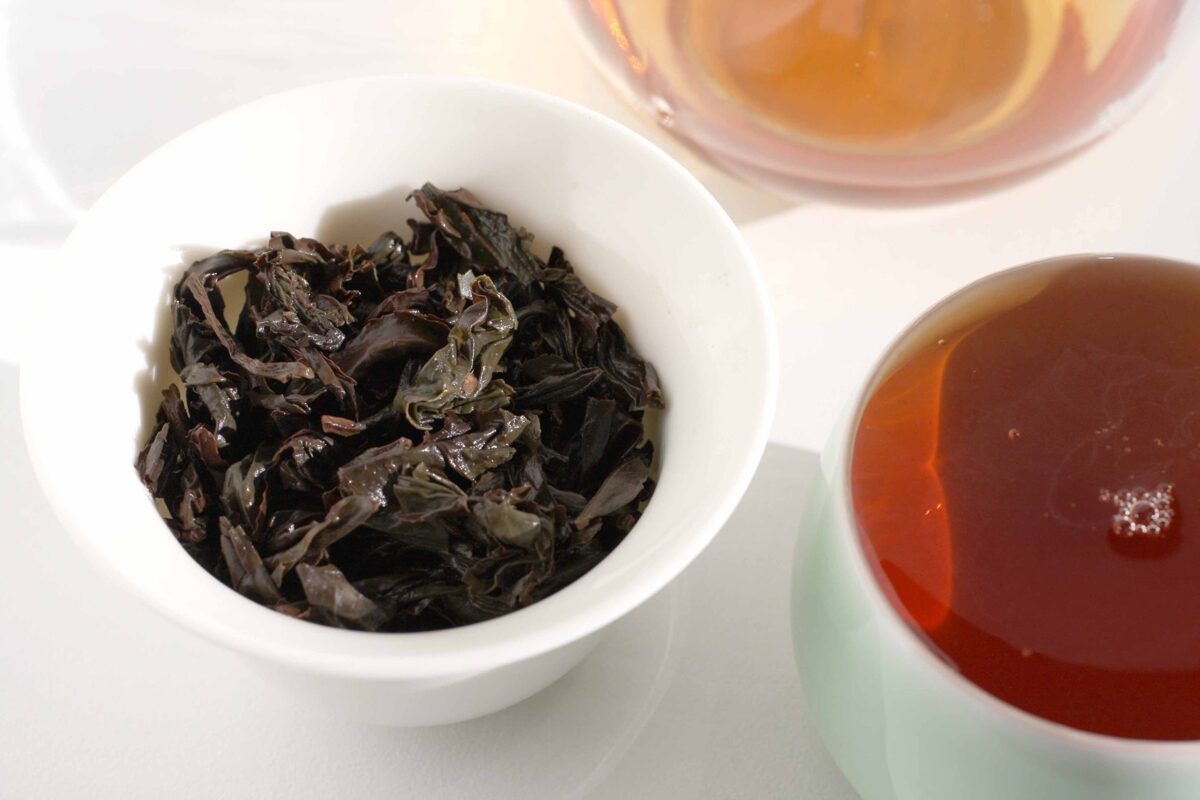
Da Hong Pao is a legendary Wuyi rock tea, but what exactly is a Wuyi rock tea?
Wuyi yancha (Wuyi rock tea) is a special type of oolong tea grown in the Wuyi Mountains of Fujian Province, China. It has a long history and a distinctive flavour profile. Wuyi rock teas are known for their characteristic mineral quality, often attributed to the rocky environment in which the tea bushes grow. The Chinese refer to this unique characteristic as yan yun ("rock character" or "rock rhyme"). This mineral note can evoke the scent of wet stone after rain or the fresh mountain air following a summer storm, adding depth and complexity to the tea. Wuyi teas are aromatic and multi-layered, with warming floral and fruity notes complemented by a long, pleasant aftertaste.
There are hundreds of different cultivars of Wuyi rock tea, each with its own distinctive flavor nuances.
The Legend of Da Hong Pao
Da Hong Pao is a legendary Wuyi rock tea known for over 500 years. It became famous for its supposed healing properties — legend has it that it cured a scholar traveling to take the imperial exams.
On his return, he covered the tea bushes with his red robe in gratitude, giving the tea its name. “Da Hong Pao” translates as “Big Red Robe.”
The original Da Hong Pao was never sold commercially — it could only be harvested and processed by highly skilled tea masters. It was reserved for emperors and gifted to high-ranking officials.
The Original Da Hong Pao Bushes
To this day, only six original bushes remain, estimated to be 300–500 years old. Until 2007, they were harvested once a year, but they are now strictly protected and no longer picked.
The last 20 grams of authentic Da Hong Pao from these bushes were sold at auction for around $28,000
What is Da Hong Pao Today?
The original Da Hong Pao refers to tea harvested from the six legendary bushes growing on a specific cliff in the Wuyi Mountains. It is not a tea cultivar in the conventional sense — historically, it refers to specific plants in a specific location, rather than a single botanical variety.
Genetic analysis shows that these six bushes are not identical, meaning they represent different genetic types rather than one uniform cultivar.
From cuttings of these original bushes, the cultivars Qi Dan and Bei Dou were developed and began to be cultivated more widely in the 1990s. These are considered the closest to the original Da Hong Pao, although they are still produced in relatively limited quantities.
To meet demand for this legendary tea, producers often blend leaves from different Wuyi rock tea cultivars to recreate the characteristic flavor profile of Da Hong Pao. Such teas are known as blended Da Hong Pao.
How to Recognize True Da Hong Pao
Pay attention to the tea cultivar. Qi Dan and Bei Dou are derived from cuttings of the original bushes and are the closest to authentic Da Hong Pao.
That said, a high-quality blended Da Hong Pao — while not technically “true” DHP — can still be exceptionally aromatic and enjoyable.
If no specific cultivar is listed on the Da Hong Pao packaging, it is most likely a more common Wuyi rock tea such as Shui Xian or Rou Gui. These teas can also be excellent when produced well. Flavor depends not only on the cultivar, but also on the microclimate and the nuances of processing.
For beginners especially, it is not essential to start with Da Hong Pao — many Wuyi teas offer a similarly rewarding experience.
At first, many of these teas may taste quite similar, and the name “Da Hong Pao” is often used in marketing to sell lower-quality Wuyi teas at a higher price.
So What Exactly is Da Hong Pao?
Da Hong Pao can refer to several different things:
- Original Da Hong Pao — tea from the six legendary bushes growing on a specific cliff in the Wuyi Mountains. This tea is not available for purchase.
- Cultivars from cuttings — Qi Dan and Bei Dou, developed from the original bushes. These are considered the closest to the original Da Hong Pao, but are produced in limited quantities.
- Blended Da Hong Pao — a blend of different Wuyi rock tea cultivars, created to replicate the characteristic flavor profile of Da Hong Pao. This is the most common form available on the market.
What Does Da Hong Pao Tea Taste Like?
Every Da Hong Pao tastes a little different. As mentioned above, the name Da Hong Pao (DHP) encompasses several different tea cultivars as well as blended teas. Each has its own character, and the cultivar is only one of many factors that influence the flavour. The growing environment and microclimate, the age of the tea bushes, the level of oxidation, the roasting process, and the tea master's craftsmanship all play an important role.
Da Hong Pao teas are known for their distinctive mineral note, often referred to as yan yun ("rock rhyme" or "rock character"), accompanied by notes of roasted nuts, fruit, dried fruit, and flowers. Depending on the tea, you may find hints of orchid, lilac, peach, plum, and other fruits, sometimes even flavours reminiscent of orange or mixed-fruit chewing gum. Wuyi rock teas are also prized for their long-lasting and lingering aftertaste.
Da Hong Pao made from the Qi Dan cultivar is often characterised by a more pronounced mineral quality, with a deeper and more concentrated flavour profile.
Da Hong Pao made from the Bei Dou cultivar is typically more aromatic, floral, and fruity, with a lighter and more elegant character.
Blended Da Hong Pao teas usually offer a balance of aroma, mineral notes, and roasted flavours.
You can watch the documentary Tea: The Drink That Changed the World (2024) on YouTube, which explores Wuyi teas in depth and features the original Da Hong Pao bushes.