Da Hong Pao
What is Wuyi Rock Tea?
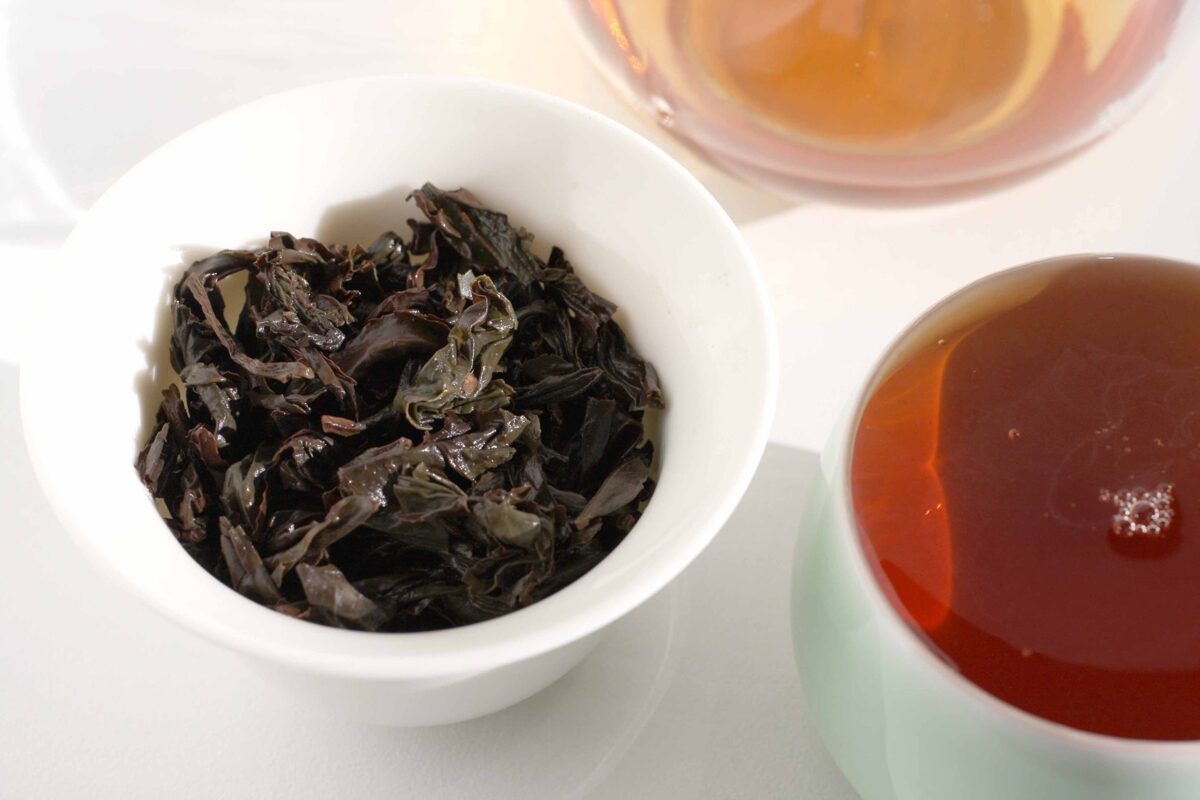
Da Hong Pao is a legendary Wuyi rock tea, but what exactly is a Wuyi rock tea?
Wuyi yancha (Wuyi rock tea) is a special type of oolong tea grown in the Wuyi Mountains of Fujian Province, China. It has a long history and a distinctive flavour profile. Wuyi rock teas are known for their characteristic mineral quality, often attributed to the rocky environment in which the tea bushes grow. The Chinese refer to this unique characteristic as yan yun ("rock character" or "rock rhyme"). This mineral note can evoke the scent of wet stone after rain or the fresh mountain air following a summer storm, adding depth and complexity to the tea. Wuyi teas are aromatic and multi-layered, with warming floral and fruity notes complemented by a long, pleasant aftertaste.
There are hundreds of different cultivars of Wuyi rock tea, each with its own distinctive flavor nuances.
The Legend of Da Hong Pao
Da Hong Pao is a legendary Wuyi rock tea known for over 500 years. It became famous for its supposed healing properties — legend has it that it cured a scholar traveling to take the imperial exams.
On his return, he covered the tea bushes with his red robe in gratitude, giving the tea its name. “Da Hong Pao” translates as “Big Red Robe.”
The original Da Hong Pao was never sold commercially — it could only be harvested and processed by highly skilled tea masters. It was reserved for emperors and gifted to high-ranking officials.
The Original Da Hong Pao Bushes
To this day, only six original bushes remain, estimated to be 300–500 years old. Until 2007, they were harvested once a year, but they are now strictly protected and no longer picked.
The last 20 grams of authentic Da Hong Pao from these bushes were sold at auction for around $28,000
What is Da Hong Pao Today?
The original Da Hong Pao refers to tea harvested from the six legendary bushes growing on a specific cliff in the Wuyi Mountains. It is not a tea cultivar in the conventional sense — historically, it refers to specific plants in a specific location, rather than a single botanical variety.
Genetic analysis shows that these six bushes are not identical, meaning they represent different genetic types rather than one uniform cultivar.
From cuttings of these original bushes, the cultivars Qi Dan and Bei Dou were developed and began to be cultivated more widely in the 1990s. These are considered the closest to the original Da Hong Pao, although they are still produced in relatively limited quantities.
To meet demand for this legendary tea, producers often blend leaves from different Wuyi rock tea cultivars to recreate the characteristic flavor profile of Da Hong Pao. Such teas are known as blended Da Hong Pao.
How to Recognize True Da Hong Pao
Pay attention to the tea cultivar. Qi Dan and Bei Dou are derived from cuttings of the original bushes and are the closest to authentic Da Hong Pao.
That said, a high-quality blended Da Hong Pao — while not technically “true” DHP — can still be exceptionally aromatic and enjoyable.
If no specific cultivar is listed on the Da Hong Pao packaging, it is most likely a more common Wuyi rock tea such as Shui Xian or Rou Gui. These teas can also be excellent when produced well. Flavor depends not only on the cultivar, but also on the microclimate and the nuances of processing.
For beginners especially, it is not essential to start with Da Hong Pao — many Wuyi teas offer a similarly rewarding experience.
At first, many of these teas may taste quite similar, and the name “Da Hong Pao” is often used in marketing to sell lower-quality Wuyi teas at a higher price.
So What Exactly is Da Hong Pao?
Da Hong Pao can refer to several different things:
- Original Da Hong Pao — tea from the six legendary bushes growing on a specific cliff in the Wuyi Mountains. This tea is not available for purchase.
- Cultivars from cuttings — Qi Dan and Bei Dou, developed from the original bushes. These are considered the closest to the original Da Hong Pao, but are produced in limited quantities.
- Blended Da Hong Pao — a blend of different Wuyi rock tea cultivars, created to replicate the characteristic flavor profile of Da Hong Pao. This is the most common form available on the market.
What Does Da Hong Pao Tea Taste Like?
Every Da Hong Pao tastes a little different. As mentioned above, the name Da Hong Pao (DHP) encompasses several different tea cultivars as well as blended teas. Each has its own character, and the cultivar is only one of many factors that influence the flavour. The growing environment and microclimate, the age of the tea bushes, the level of oxidation, the roasting process, and the tea master's craftsmanship all play an important role.
Da Hong Pao teas are known for their distinctive mineral note, often referred to as yan yun ("rock rhyme" or "rock character"), accompanied by notes of roasted nuts, fruit, dried fruit, and flowers. Depending on the tea, you may find hints of orchid, lilac, peach, plum, and other fruits, sometimes even flavours reminiscent of orange or mixed-fruit chewing gum. Wuyi rock teas are also prized for their long-lasting and lingering aftertaste.
Da Hong Pao made from the Qi Dan cultivar is often characterised by a more pronounced mineral quality, with a deeper and more concentrated flavour profile.
Da Hong Pao made from the Bei Dou cultivar is typically more aromatic, floral, and fruity, with a lighter and more elegant character.
Blended Da Hong Pao teas usually offer a balance of aroma, mineral notes, and roasted flavours.
You can watch the documentary Tea: The Drink That Changed the World (2024) on YouTube, which explores Wuyi teas in depth and features the original Da Hong Pao bushes.
How to Brew the Perfect Cup of Tea at Home
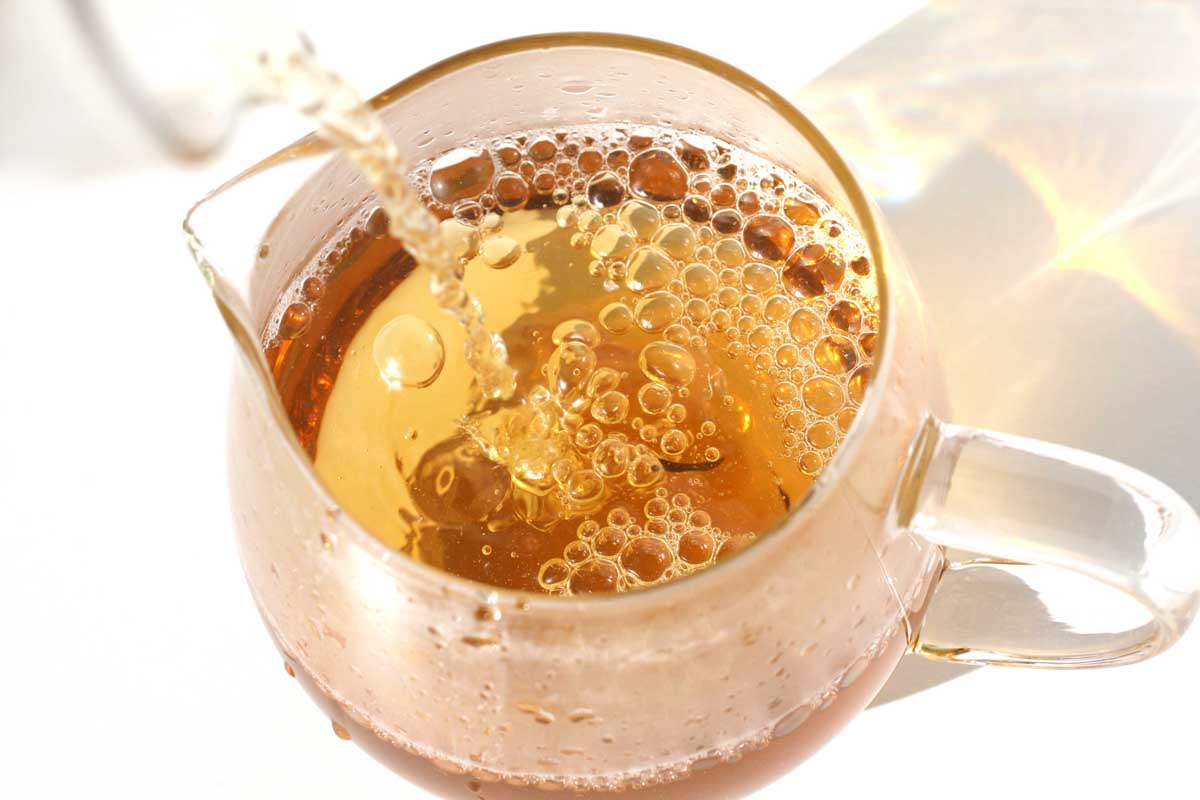 The world of tea is rich and diverse. I could talk about it endlessly, but here I’ve gathered the essentials – simple tips that will help you prepare truly exceptional tea at home.
Choosing the Right Water
Water quality has a huge impact on the taste of tea – ideally it should be neutral (with a pH around 7). The best choice would be clean spring water, but of course that’s not always accessible. For everyday brewing, I’ve found that filtered tap water is both practical and reliable.
I personally use a Brita filter jug, and it works wonderfully. The water has no strange aftertaste, and my kettle hasn’t developed limescale in years – not even a trace. Since switching to filtered water, I’ve never had to descale my kettle, which feels like magic. Of course, I should mention that I live in Riga (Purvciems district), and water quality may vary depending on where you live.
I’ve also tested several types of bottled spring water, and almost all of them left limescale in my kettle very quickly. Once, I even tried a supposedly “exclusive” spring water – we did a blind taste test with a few friends, comparing it to filtered tap water. The unanimous winner? Filtered tap water.
Tea Brewing Styles
There are countless ways to make tea – some people add sugar, milk, spices, even butter (in the Himalayas, it’s common to add salt and butter). But to truly highlight the character of the tea itself, all you really need is hot water.
There are two main brewing styles:
-
Western style – the familiar method of steeping tea in a larger teapot or mug.
-
Eastern style (Gong Fu) – often called a tea ceremony, with short, repeated infusions that bring out different layers of flavor and aroma.
Brewing Tea the Western Style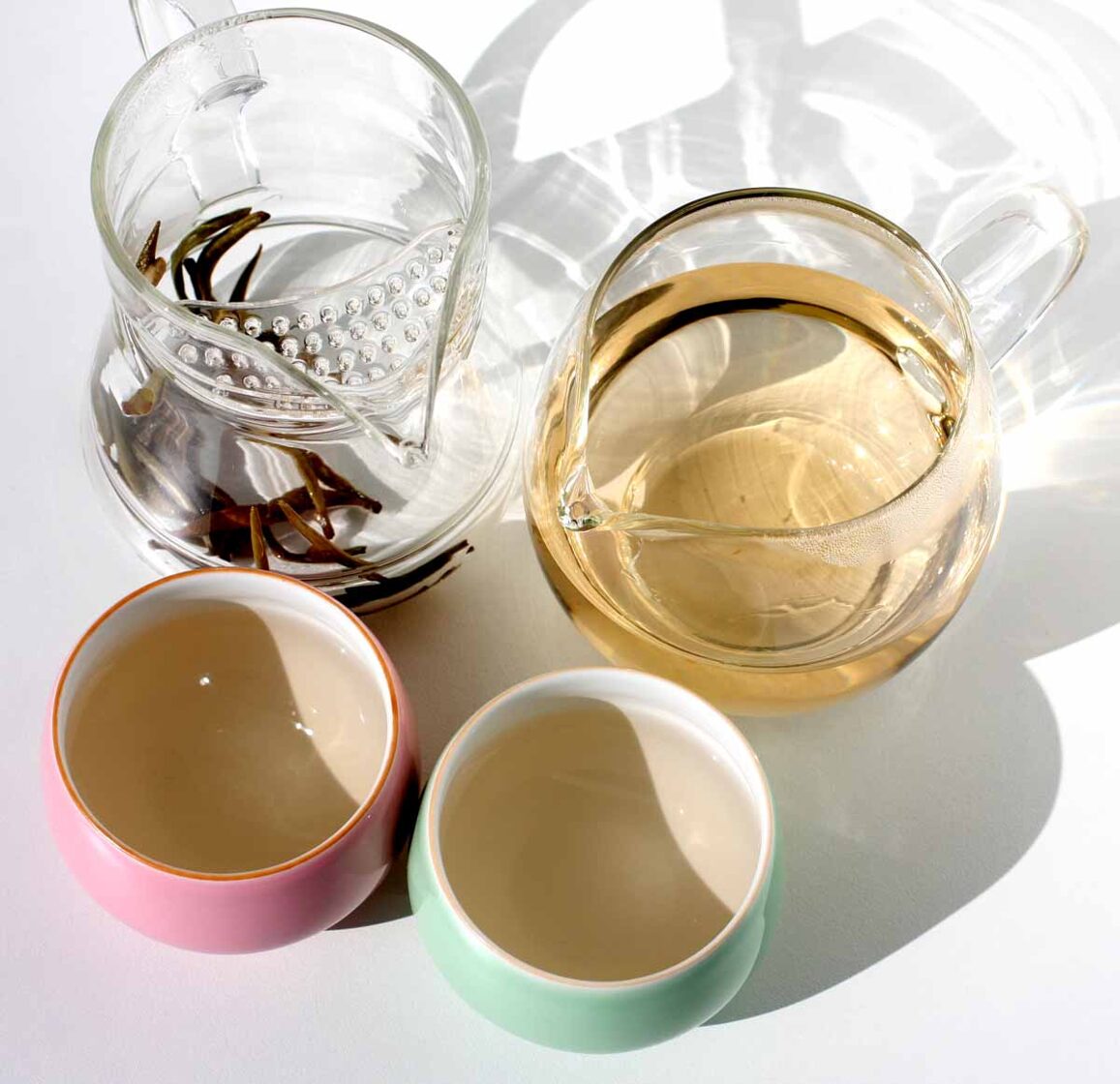
I’ve tried many different teapots and brewing vessels, but my favorite is the simple glass teapot. If you want a quick and fuss-free way to make great tea, this little pot is perfect. (Two fairness cups or something similar may work as well)
It gives the tea leaves room to expand, the volume (300 ml) is just right to finish at a pleasant drinking temperature, and the built-in strainer makes pouring easy once the tea has steeped. Even though it’s glass and could in theory break, mine have proven very sturdy. I use them daily, and despite the fact that dishes in my home tend to break often, not a single one of these has.
Step by Step
-
Measure the tea leaves.
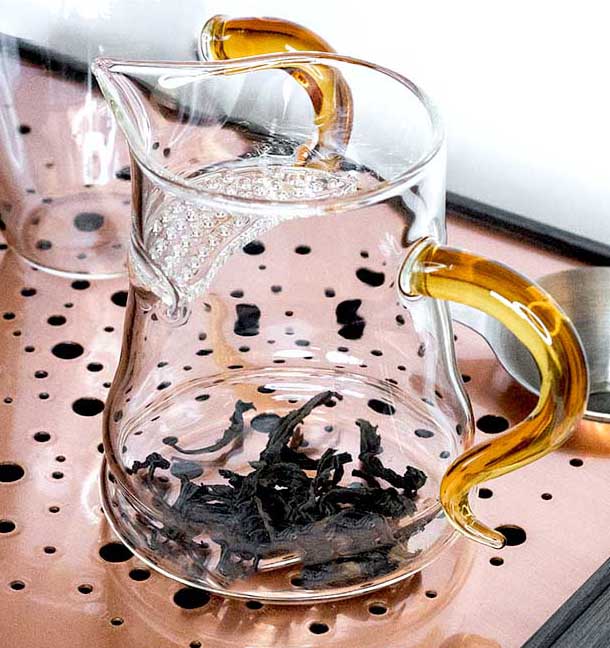
For this 300 ml pot, I use about 2–3 grams of tea. If you don’t have a precise scale, don’t worry – just experiment until you find what works for your taste. -
Add hot water.
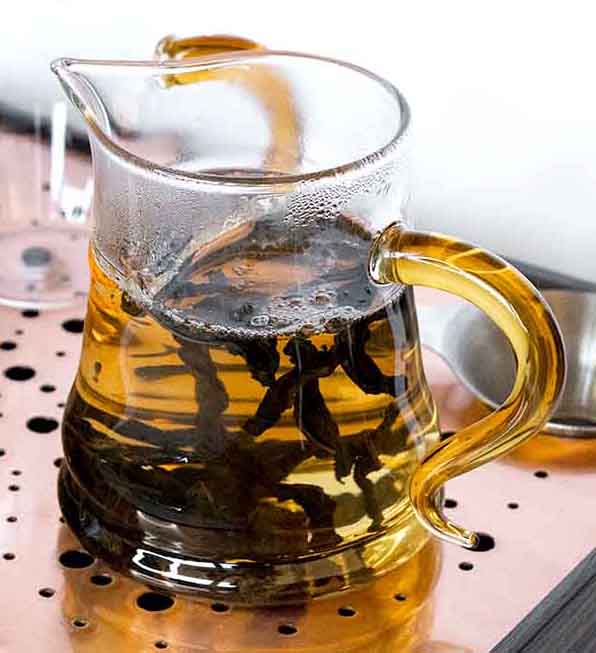
Temperature is crucial: many teas taste better if you don’t use boiling water. If your tea packaging doesn’t specify, 90 °C is a safe place to start experimenting. -
Let it steep for 2–5 minutes.
-
Pour the tea into another vessel.
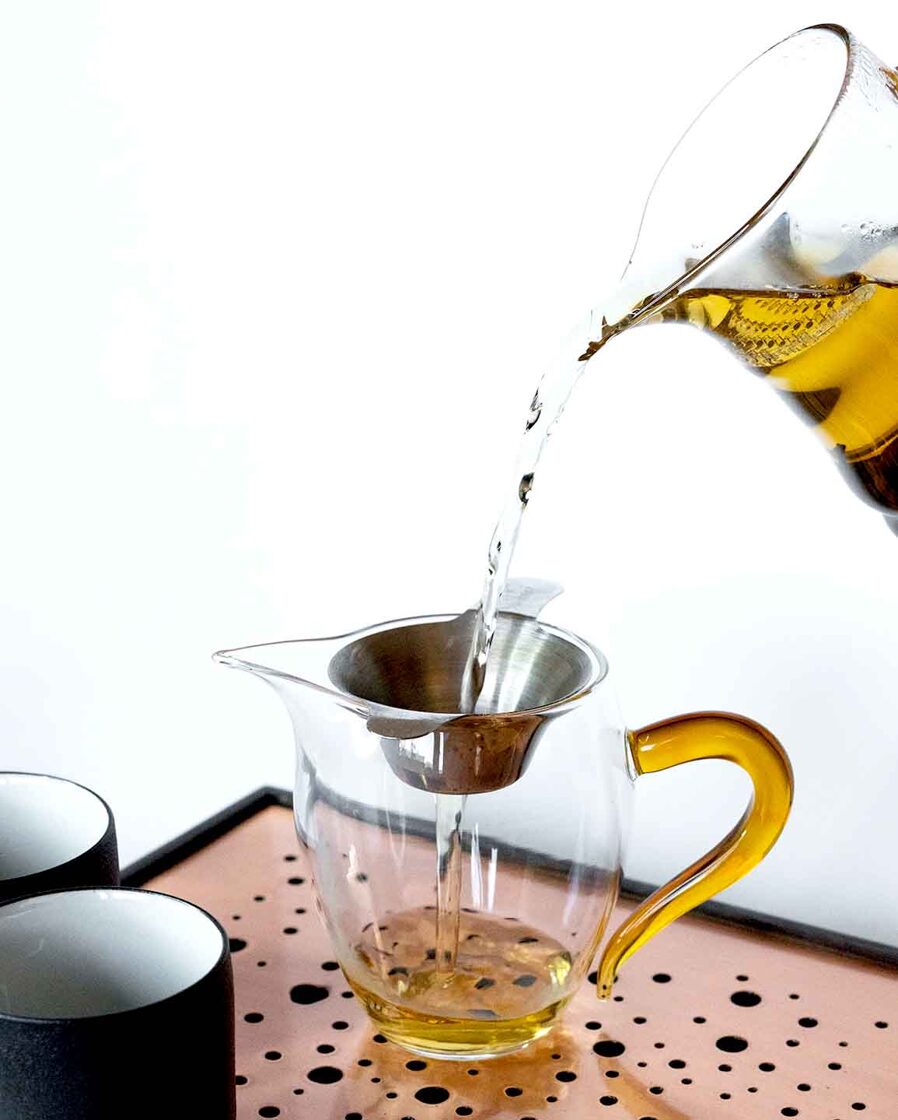
This step is very important – pour out all the tea at once so it doesn’t keep steeping and turn too strong.You can pour directly into a mug, but I recommend using fairness cup. It keeps the tea warm, allows you to pour a little at a time so it’s always at the perfect drinking temperature, and makes it easy to share with a friend.
A small extra strainer can also be useful, as tiny leaves sometimes slip past the built-in filter.
-
Enjoy!
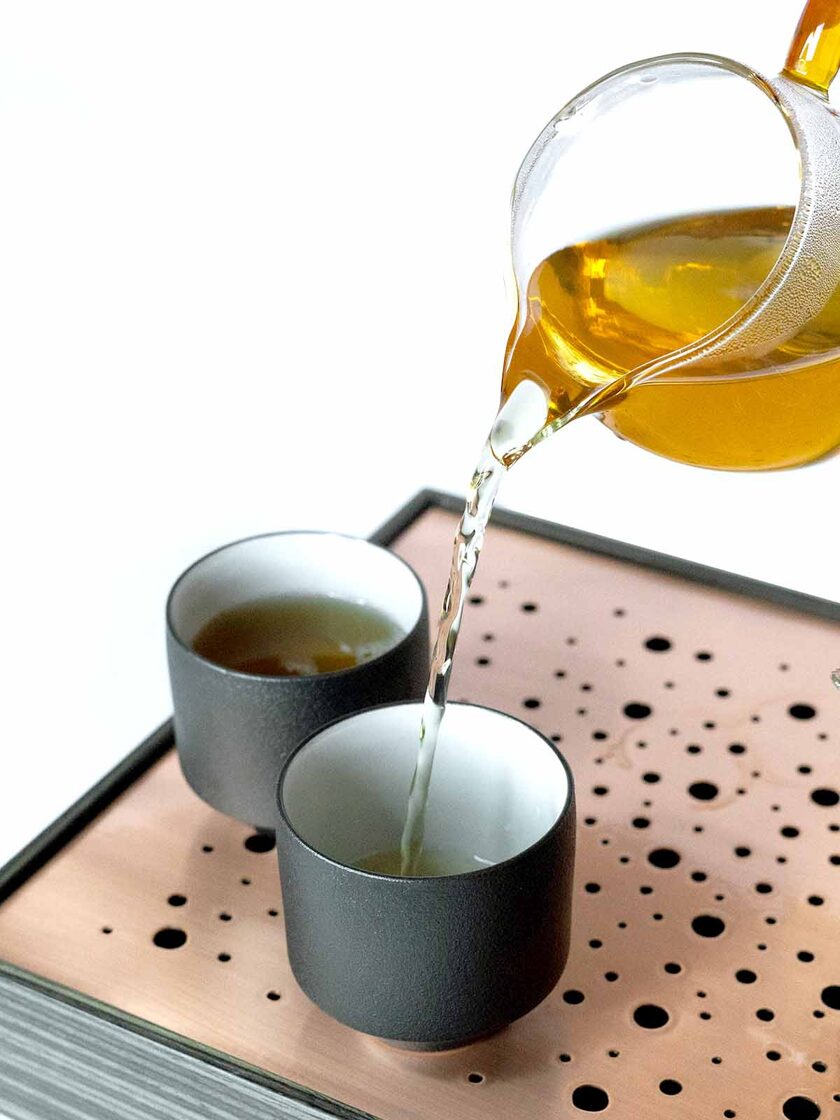
Sip a little at a time. This way the tea is ready to drink right away, and the rest stays warm in the fairness cup until you’re ready for more.
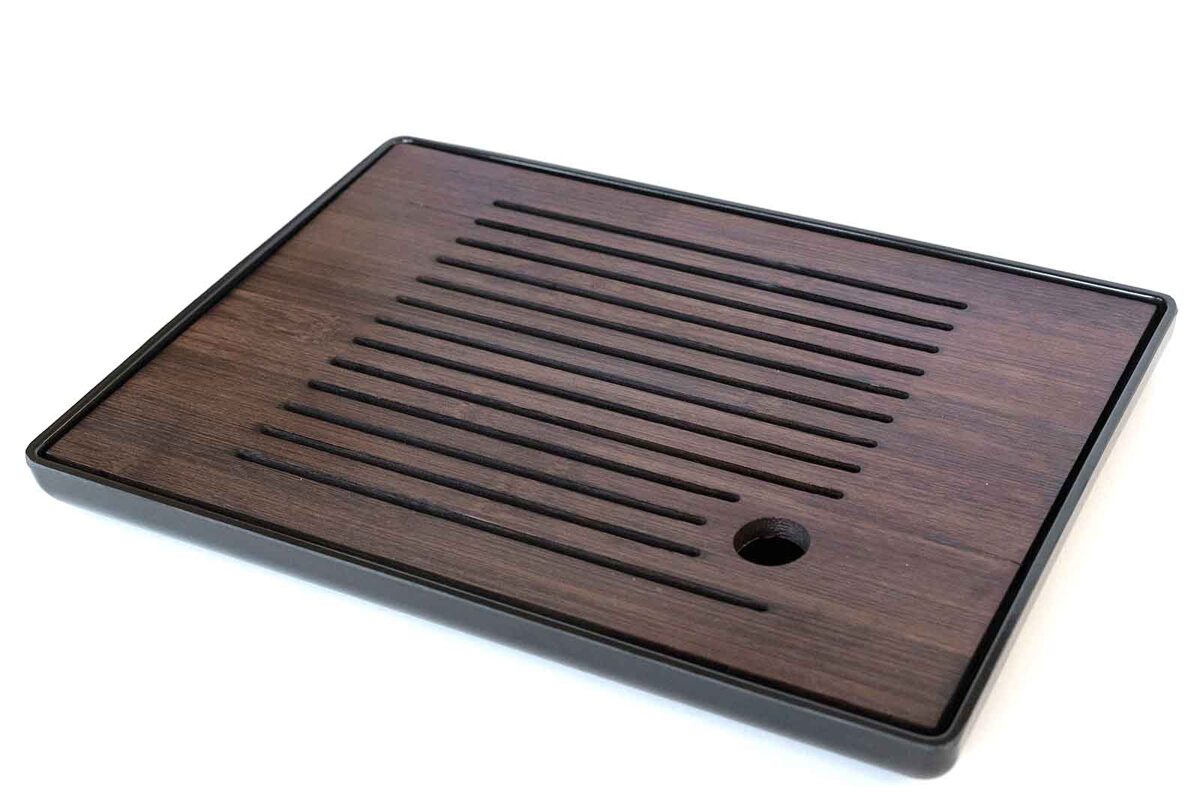
A tea tray isn’t essential for this style, but it’s very handy. It catches stray drips and makes moving all your teaware around much easier.
What If the Tea Doesn’t Taste Right?
Even the best leaves can be spoiled by improper brewing.
-
If your tea tastes too bitter or strong, reduce the amount of leaves, lower the water temperature, or shorten the steeping time.
-
If it tastes too weak or flat, add a little more leaf.
Don’t be afraid to experiment – your perfect cup might be slightly different from mine, and there’s no single “correct” recipe.
Brewing Tea the Gong Fu Style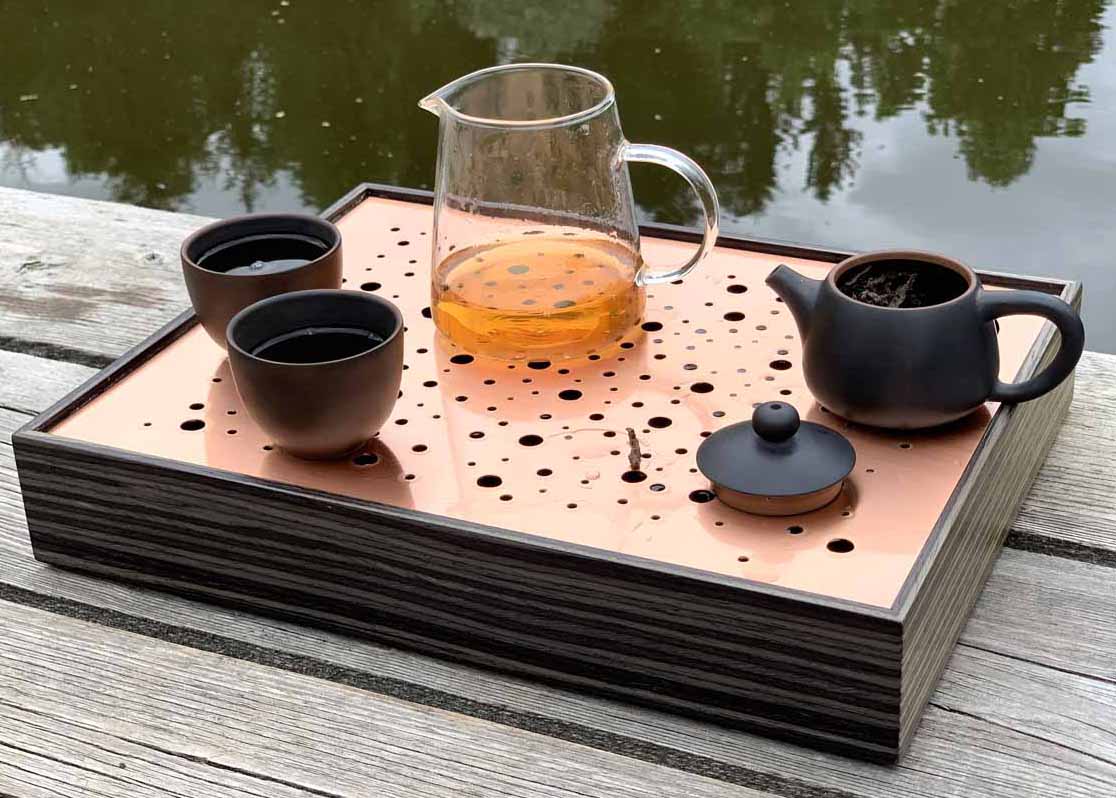
This style is not just about making tea – it’s about truly experiencing it. You don’t just taste it, you also smell it, savor it, and pay attention to every nuance.
Unlike the Western method (where you can improvise with almost any mug or teapot), Gong Fu brewing requires some dedicated teaware. And yes, it will demand your full attention – but if you love tea, it’s a deeply rewarding way to spend your time.
For heating water, I recommend a gooseneck kettle that lets you control temperature precisely (Like the Fellow Stagg EKG for example – it’s also available here in Latvia).
At first Gong Fu brewing might feel complicated, because every detail affects the taste, and there are so many possible variations. But once you have the right tools and a bit of practice, it becomes simple – and the tea you get is extraordinary.
What You’ll Need
-
A gaiwan or a small teapot (typically around 100 ml; 200 ml is considered large). Yixing clay teapots are highly prized, but for beginners a porcelain gaiwan is ideal.
-
A fairness cup for pouring the tea, ideally at least twice the volume of your gaiwan.
-
A strainer, very useful for catching fine leaves.
-
A tea tray, to catch excess water.
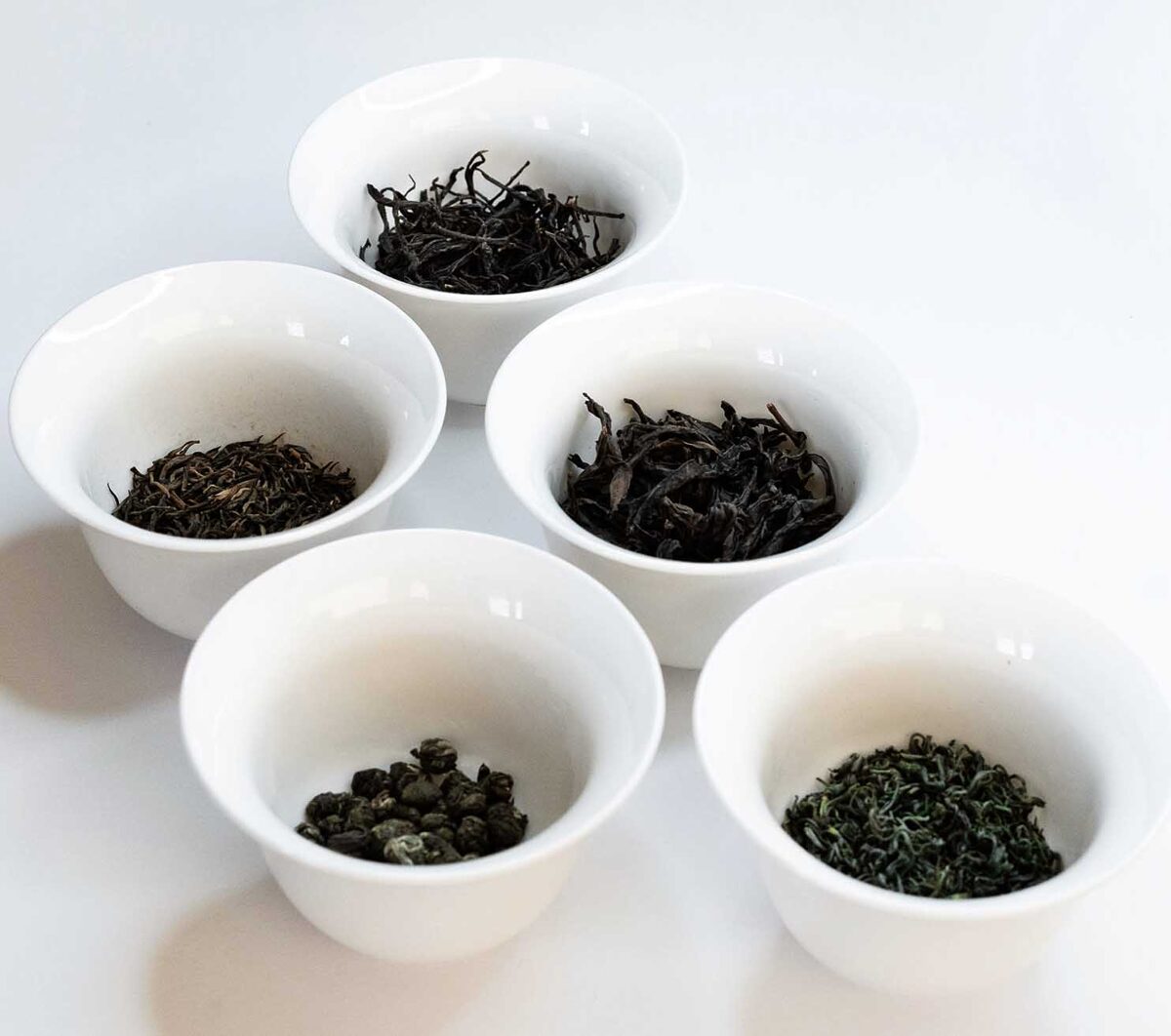 For a 100 ml gaiwan I usually use about 5 grams of tea. A scale is helpful, but you can manage without it. In the picture you can see the approximate amount for different types of tea. If the leaves are large, the gaiwan will be almost full.
Step by Step
-
Warm the gaiwan. Pour in hot water and let it sit briefly, then discard the water.
-
Add the tea leaves and enjoy the aroma.
-
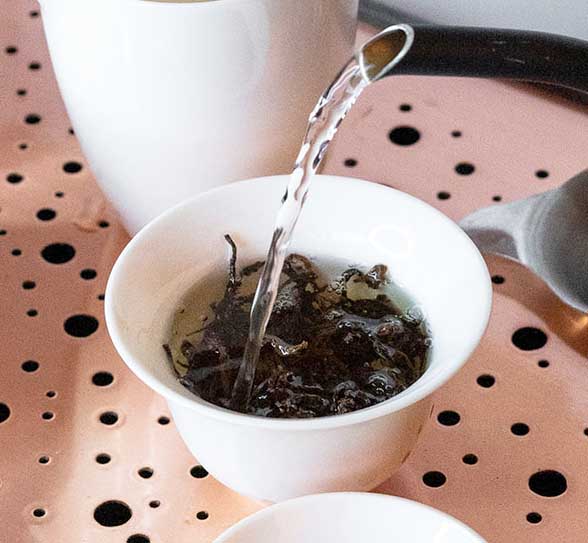
Rinse the leaves. Pour hot water over them and immediately pour it out. (This first rinse isn’t for drinking – it simply wakes up the leaves.)
-
Smell again. The aroma will already have changed, revealing new notes.
-
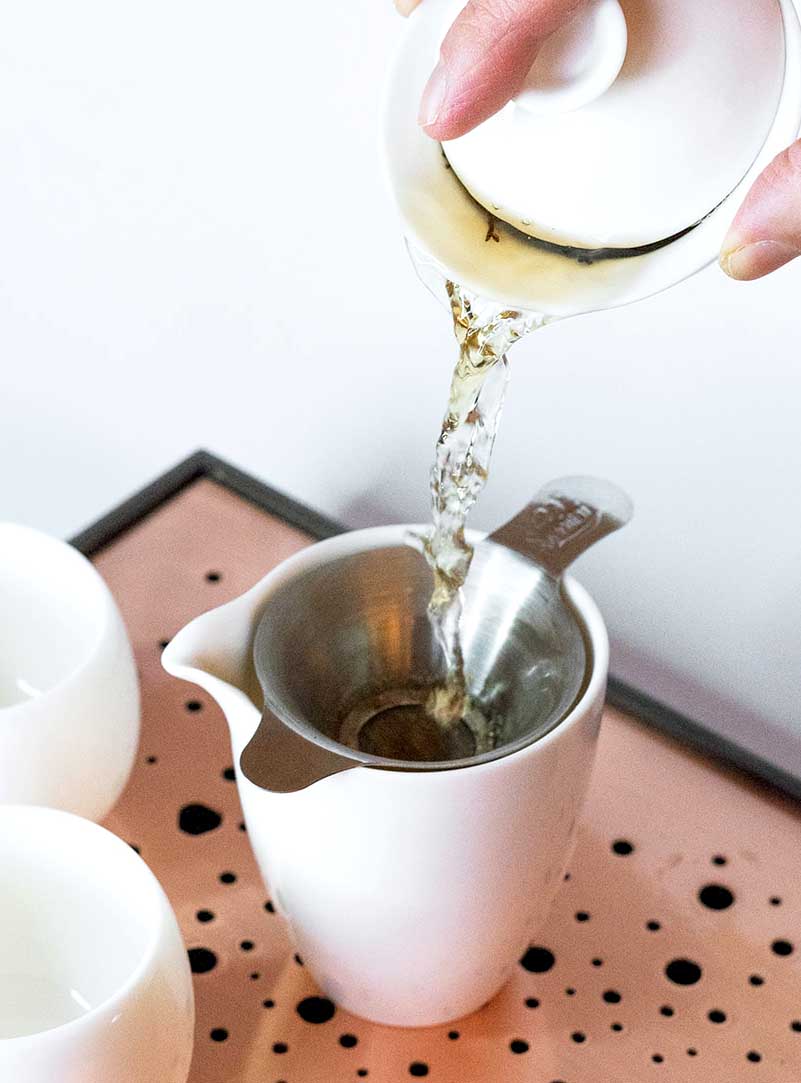
First infusion. Pour hot water, wait 10–20 seconds, and then decant into the fairness cup. This first steep is ready to enjoy.
-
Repeat. With each infusion, let the tea steep slightly longer.
You can usually re-steep the same leaves 5–10 times, sometimes even more, depending on the tea.
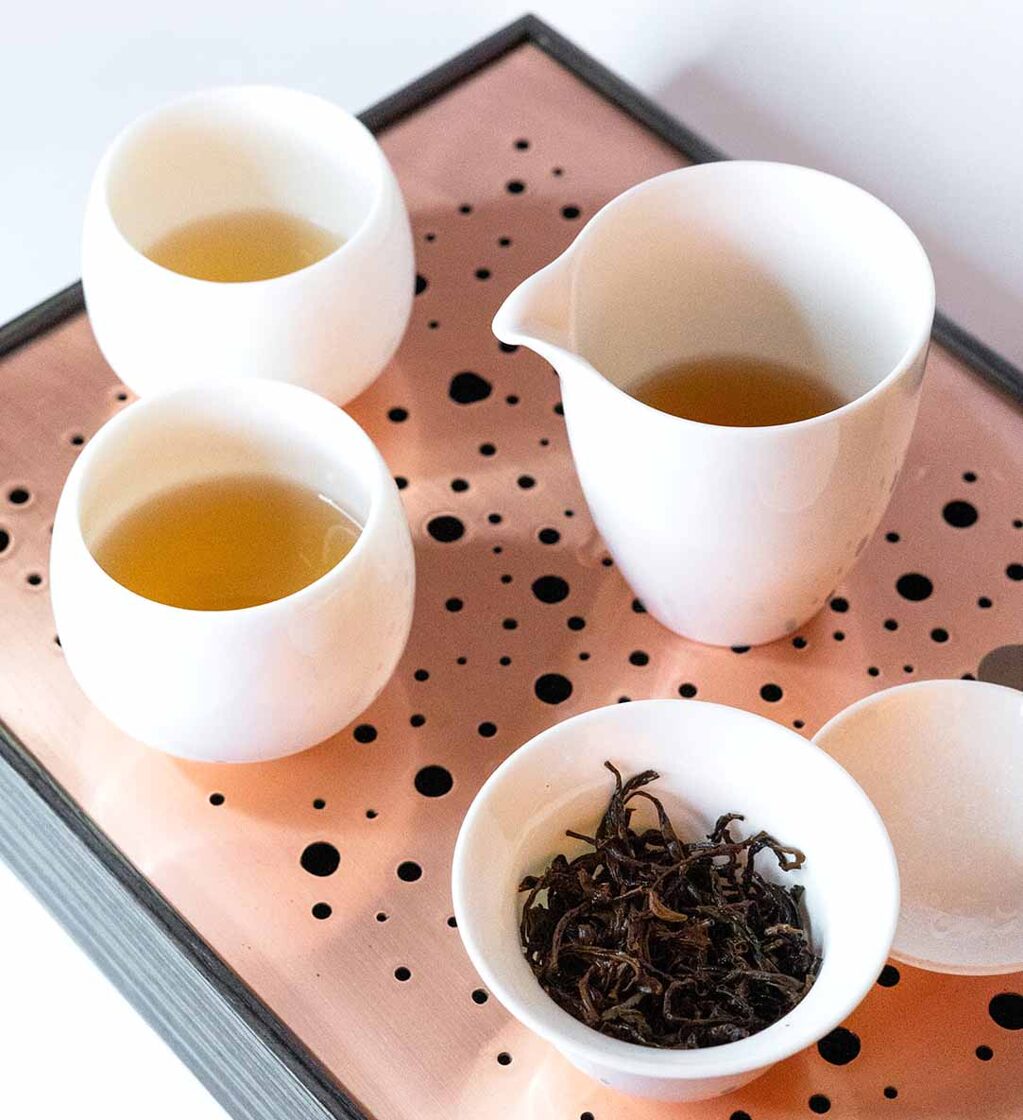 The first infusions can be very strong. For some black teas, even 10 seconds is already too much – don’t be afraid to pour almost immediately. If the tea tastes overpowering, shorten the steeping time or lower the water temperature.
Compared to Western-style brewing, Gong Fu tea is more intense, layered, and nuanced.
Final Thoughts
Although Gong Fu style is relatively new in Europe, it’s gaining popularity rapidly – and for good reason.
The word gong fu can be translated as “skill through effort – something that requires great skill and discipline .” And that’s exactly what it takes: a little patience and practice. I remember my first attempts – it didn’t turn out perfect, but it was worth every try.
My advice? Don’t get too hung up on grams and seconds. Trust your senses, enjoy the process, and let the tea guide you!
Tea and Caffeine
Tea and Caffeine: Myths, Facts, and How to Control Your Intake
Does White Tea Really Have No Caffeine?
A common myth claims that white tea is caffeine-free or that green tea contains very little caffeine. In reality, all tea that comes from the Camellia sinensis plant contains caffeine.
Caffeine is the most widely consumed psychoactive substance in the world, found in about 60 different plants. Globally, it is most often consumed through tea and coffee. Its main effect is stimulating the nervous system, but it leaves the body relatively quickly and does not accumulate.
Why Tea and Coffee Feel Different.
Many people notice that the stimulating effect of tea feels gentler than that of coffee. This is because tea also contains L-theanine, an amino acid that works in synergy with caffeine. Together they promote alertness and concentration, while at the same time reducing jitters, supporting a calm state of mind, and enhancing overall mood.
How Much Caffeine Is in a Cup of Tea?
For a healthy adult, the recommended daily intake of caffeine is up to about 400 mg.
A standard cup of tea (250 ml) may contain anywhere from 10–60 mg of caffeine. The variation is wide because caffeine levels depend on many factors — from the type of leaves to how the tea is brewed.
Key factors that influence caffeine in tea
1. Leaf buds vs. mature leaves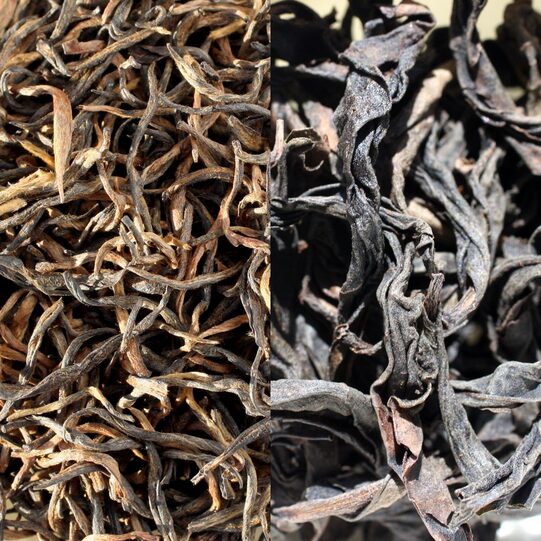
Young tea buds contain more caffeine than older, larger leaves. This is because the Camellia sinensis plant produces caffeine as a natural insect repellent. Tender buds are more vulnerable to pests, so the plant protects them with higher caffeine content.
Season also matters: summer harvests tend to have more caffeine than spring harvests, again due to greater insect activity.
2. Tea variety
Camellia sinensis has several varieties and hybrids, but two are most common in tea production:
-
Camellia sinensis var. sinensis
-
Camellia sinensis var. assamica
Assamica leaves can contain up to 30% more caffeine than sinensis. This variety is most often used for black teas, grown widely in southern China, India, Africa, and Sri Lanka. The “regular black tea” sold in most supermarkets usually comes from assamica grown in India or Sri Lanka.
3. Brewing method
How you prepare your tea also makes a big difference. Hotter water extracts more caffeine, as do longer steeping times and larger amounts of leaf. For example, tea brewed with boiling water will contain more caffeine than tea made with slightly cooler water
Final thoughts
By keeping these factors in mind, you can adjust your brewing to control how much caffeine ends up in your cup.
If you’re sensitive to caffeine, a spring-harvested oolong tea from China may be a gentler choice — these teas are usually made from larger leaves, which naturally contain less caffeine.
The Tea Plant – Camellia sinensis
Camellias
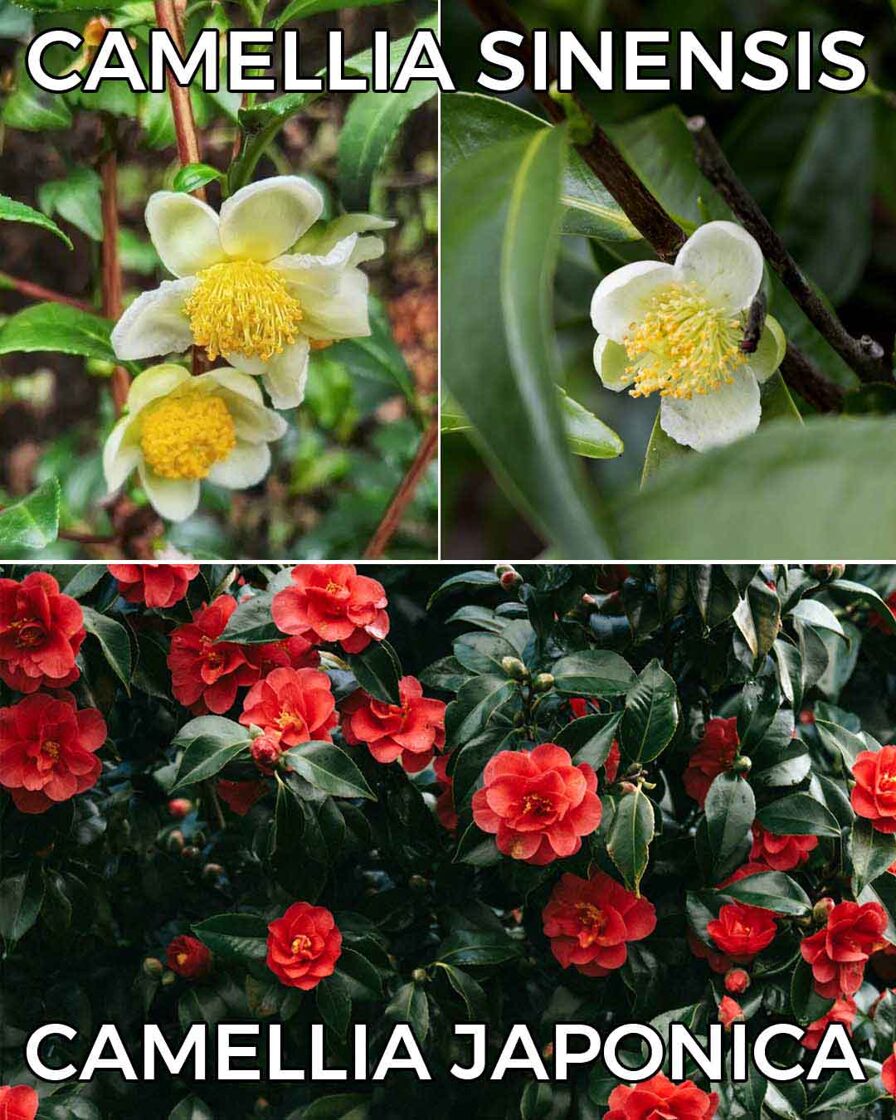
Camellia sinensis is a species of the Camellia genus in the tea family (Theaceae). There are over 200 species in the Camellia genus, and thousands of cultivars. Many are grown as ornamental plants, while seeds from a few — including Camellia sinensis — are used to produce edible tea oil.
However, the tea tree oil used in cosmetics comes from a completely different plant — Melaleuca alternifolia, which belongs to the myrtle family (Myrtaceae), not the tea plant.
Camellias are evergreen shrubs or small trees that grow best in tropical and subtropical climates. Some cultivars can survive temperatures as low as –15°C.
Two Species Used for Tea
Tea is made from two species of the Camellia genus:
-
Camellia sinensis (the main one)
-
Camellia taliensis (used more rarely)
Camellia taliensis grows in southwestern Yunnan, China, and nearby border regions. While it is a true tea plant, most tea worldwide is made from Camellia sinensis, which is why the word “tea” usually refers to this species.
All True Tea Comes from Camellia sinensis
Black, green, white, yellow, oolong, and dark teas – all are made from the leaves of Camellia sinensis.
Camellia sinensis has several varieties and hybrids, but two are most commonly used for tea – Camellia sinensis var. sinensis and Camellia sinensis var. assamica. They have more than thousand cultivars.Sinensis vs. Assamica – What’s the Difference?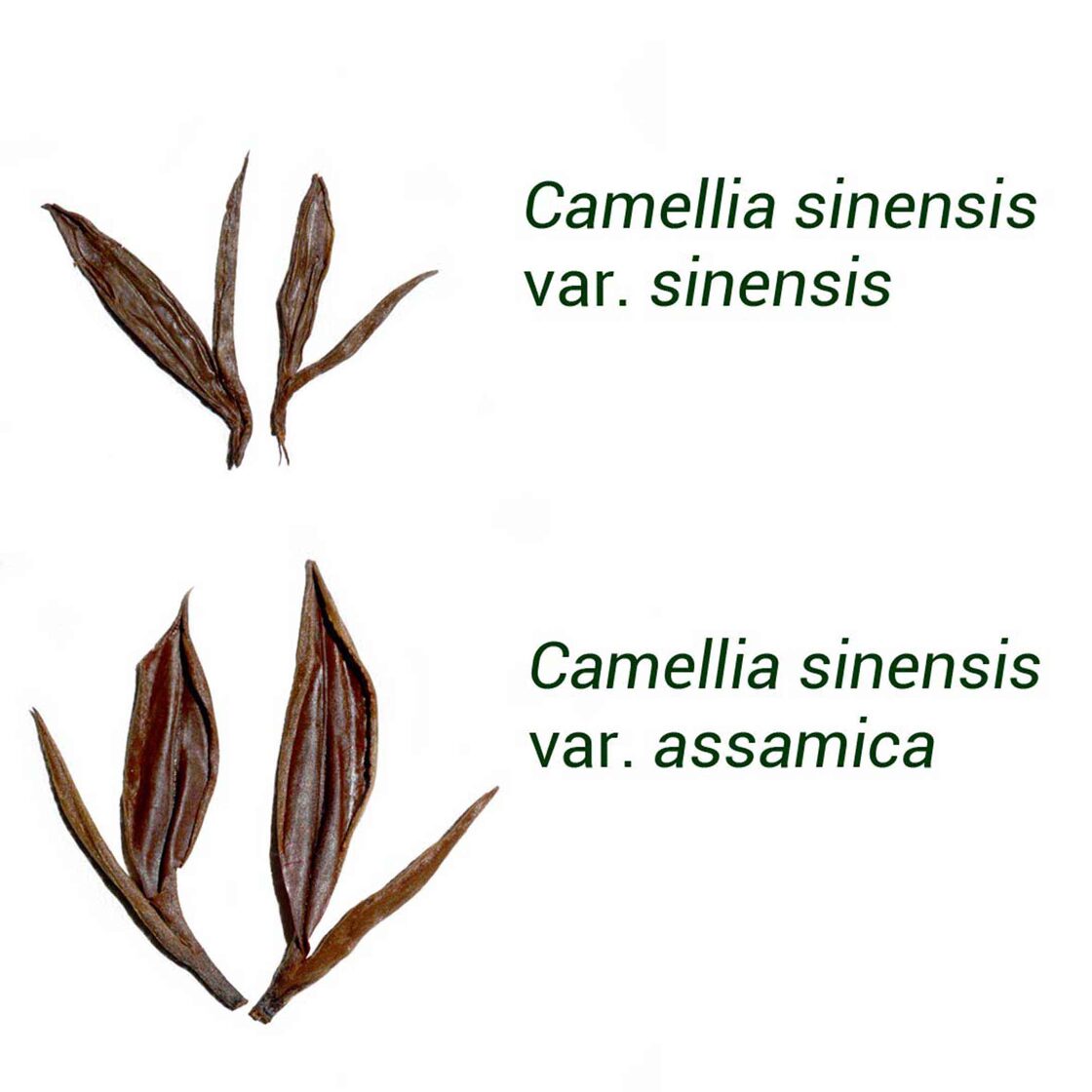
-
Camellia sinensis var. sinensis:
Smaller leaves, more delicate and complex flavors. Grown mainly in cooler, high-altitude regions — most common in China and Himalaya – Darjeeling and Kalimpong . -
Camellia sinensis var. assamica:
Larger leaves, bold, full-bodied taste. Prefers warmer, lower-altitude climates. Most commonly grown in India, Sri Lanka and Yunnan province in China — famous for black tea.
Teas made from assamica tend to be more affordable because the plants produce larger yields and are often harvested multiple times a year — up to 8 harvests annually. In contrast, high-mountain teas from the sinensis variety are usually picked only once a year and are considered more premium.
While these two varieties differ, the distinction isn’t always obvious — some sinensis cultivars have larger leaves, and some assamica cultivars have smaller ones. In the end, flavor depends not only on the variety but also on every step of processing — from harvest to your cup.
The names come from their origins:
-
Sinensis means “from China”
-
Assamica means “from Assam,” a state in India — though some researchers believe assamica may have originated in southwest China.
From Bushes to Ancient Trees
Camellia sinensis most commonly grows as a shrub. In tea gardens, the shrubs are pruned once a year to make harvesting easier. They begin to yield harvests in the third year after planting and remain productive for at least 30 years, and much longer under suitable conditions.
In the wild, however, Camellia sinensis can grow into tall trees and live for hundreds of years. The oldest tea forests are found in Yunnan, China — with trees estimated to be between 100 and 800 years old. Some individual trees are believed to be even older. Leaves from these ancient trees are typically used to produce pu-erh tea. In fact, the age of the tree is directly linked to the tea’s value — the older the tree, the more prized (and more expensive) the resulting tea
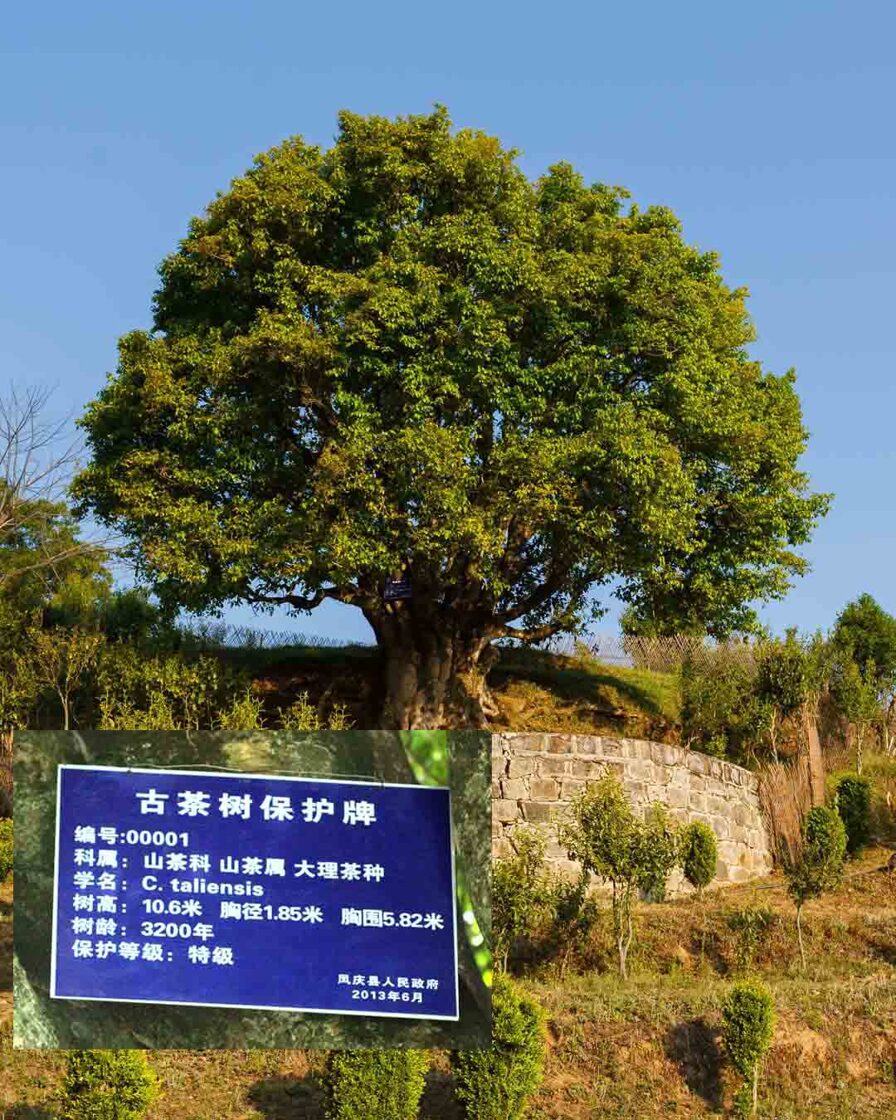 In this region, there are also several individual tea trees believed to be around 2,000 years old — the oldest one is said to be 3,200 years old (shown in the photo). However, this is Camellia taliensis – a species of the Camellia genus mentioned earlier, which is also used to produce tea, though in comparatively smaller quantities.
Where do Tea Plants Grow Today?
The natural growing area of Camellia sinensis is considered to be southwestern China and the surrounding border regions. Nowadays, tea is cultivated in at least 40 countries around the world, even in the United Kingdom – Scotland. Scotland is currently the northernmost location where Camellia sinensis is commercially cultivated.